Designing a developer tool for non-technical users from zero to alpha
A solo end-to-end product design project, from information architecture through Alpha release, working directly with the CTO to make complex infrastructure accessible to non-technical users.
Context
dataMill is an AI/ETL data manipulation tool powered by GPU processing, built to help teams connect raw data sources, process and structure them, and manage the underlying infrastructure. Accessible both from mobile and web.
My role
Solo designer, working closely with DataMola CTO Kiryl Bucha to translate his product vision into a real interface. Responsible for:
Information architecture
User flows and authentication
Core interface design across all screens
Challenge
GPU processing consumes money in real time. Business stakeholders needed to understand where that money was going — and be able to start or stop environments safely, without a technical background. Engineers needed the opposite: a fast, code-based configuration they could trust.
One product. Two very different users. Both had to feel at home.
Information architecture
Before touching screens, the full product structure needed mapping:
Two entry points: personal and organisation accounts
Five user roles with different permission scopes
Hierarchy: Root → Management account → Organisation → Project → Environment
Getting this right was foundational. Every screen, permission, and billing context depended on it.
Authentication
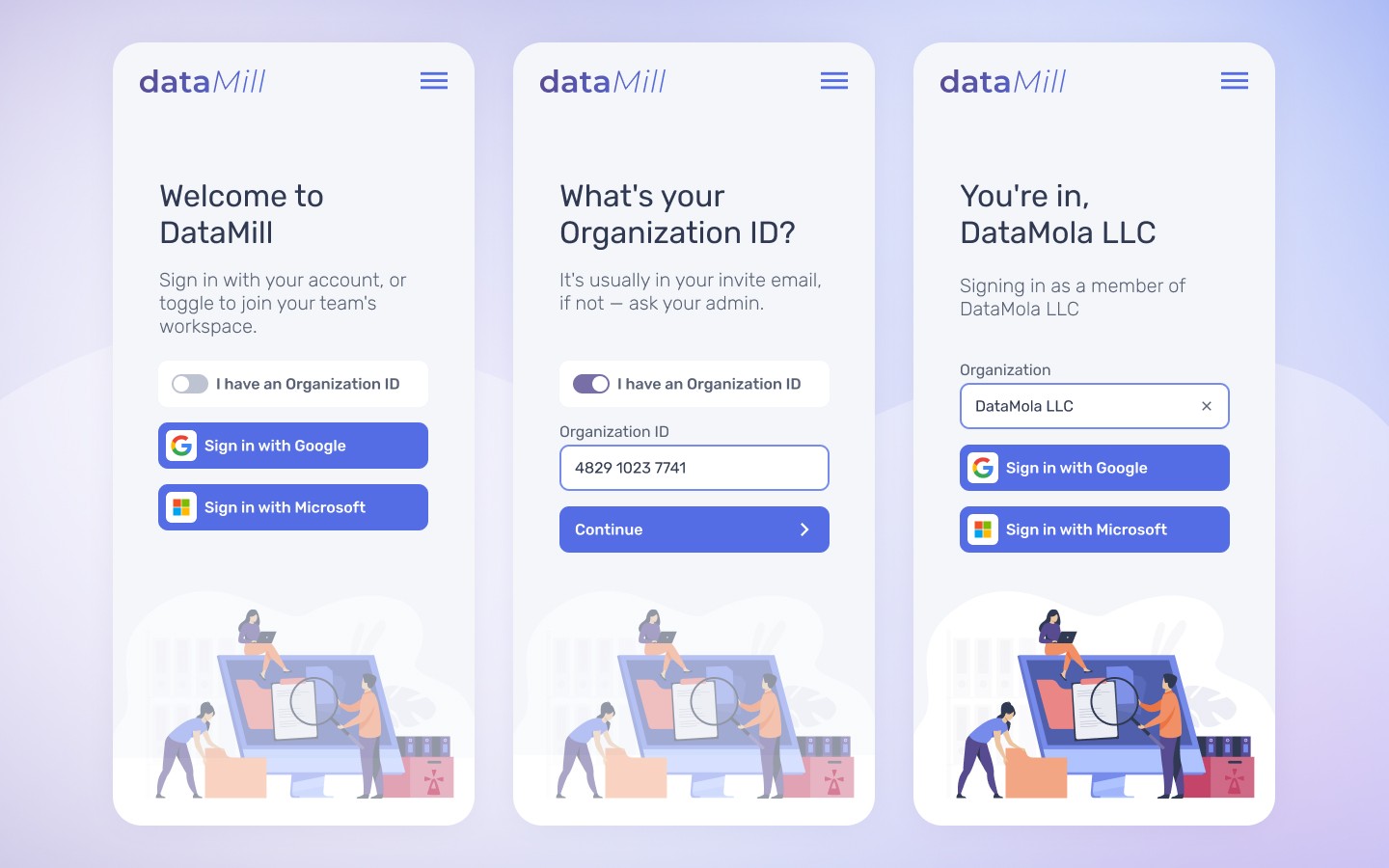
Two entry paths, one screen. Progressive disclosure keeps it clean:
Personal account: SSO options shown immediately
Organisation account: Organisation ID field first, SSO appears after confirmation
Core interface
The environment configuration screen is the heart of the Alpha product. The solution was a togglable dual-mode editor:
Form mode: structured fields, dropdowns, helper text for business users
JSON mode: raw code editor with syntax highlighting for developers
Both modes edit the same data. Switching is instant and non-destructive. The unsaved changes indicator persists across both modes.
Outcome
The Alpha launch confirmed the design solved the right problem. Non-technical stakeholders could navigate the interface, understand where GPU costs were going, and start or stop environments confidently. A complex infrastructure product became something anyone in the room could follow and want to use.